

Israel’s recognition of the Armenian genocide may carry diplomatic costs that reach beyond Turkey.
38 Women and Children Killed in Iran Over Two Months
Tabriz Activist Mehrdad Qadiri Arrested
Iran’s Oil Reserves Stored on Tankers Run Dry Amid US Blockade – WSJ
Trump Says US Will Reach an Outcome on Iran “One Way or the Other” Soon
Al-Akhbar: US issues final warning to Iran over strikes on nuclear facilities
Arabian Gulf oil exports exceed prewar levels despite Iranian attacks — WSJ
Renewed US-Israeli attacks on Iran remain possible, FT reports
Two Lawyers Arrested in Tabriz
Amnesty International Raises Alarm Over Executions in Iran
Anti-Azerbaijan Protest Held in Tehran
Political Prisoner Dies in Karaj Prison
Iran Arrests 39 People Over January Protests
Israel’s Foreign Minister Accuses Iran of Hypocrisy Over Comments on France’s Protest Crackdown
US Attack on Iran Possible, Araghchi Warns
Vance Says He and Trump Share the Same Approach to Military Action Against Iran
IRGC Helping Direct Houthi Attacks, Media Reports
Saudi Arabia Accuses Iran of Fueling Increased Houthi Attacks
Another Cleric Killed in Iran
Kurdish Party Reasserts Territorial Claims Against Azerbaijan
Anti-Azerbaijan Protest Held in Mashhad
Israeli President: Azerbaijan is a very tolerant country, Baku taking important steps for international peace under such circumstances
US Weighs Deploying ‘Mother of All Bombs’ in Potential Strikes on Iran – CNN
Islamic Republic Could Fall Under These Circumstances – Ardestani
Women’s Basij Unit Commander Killed in Shooting in Sistan and Baluchestan
Iranian Police Shoot and Kill Three Civilians
Four More Prisoners Executed in Three Iranian Cities
Qatar’s Emir Accuses Iran of Violating the Country’s Sovereignty
Lake Urmia’s ecological balance remains unrestored, official says
WSJ: Iran threatens to deploy troops into neighboring countries as it prepares for renewed war
Chinese Foreign Minister Wang Yi to Visit Azerbaijan
Israeli President Isaac Herzog to Visit Azerbaijan
Hundreds of armed fighters sent into Iran, state-linked media reports
Iran’s Supreme Court Upholds Death Sentence of Another Political Prisoner
Armed Clashes in Iran Leave Dead
Isfahan Judiciary Chief Threatens Women Who Do Not Wear Hijab
Ideological Centers in Iran Call for Provocations in Azerbaijan
Mirsalim: Iran’s Oil Belongs to God and the Prophet
US Report: Iran’s IRGC Recruits Children as Young as 12 for Security Missions
Iran sentences another protester to death
Three-day strike plan against Iran presented to Trump
Police Major Shot Dead in Iran’s Sistan and Baluchestan Province
Police arrest 16 people in operation across Tabriz
Iran targets Kurdish bases in northern Iraq
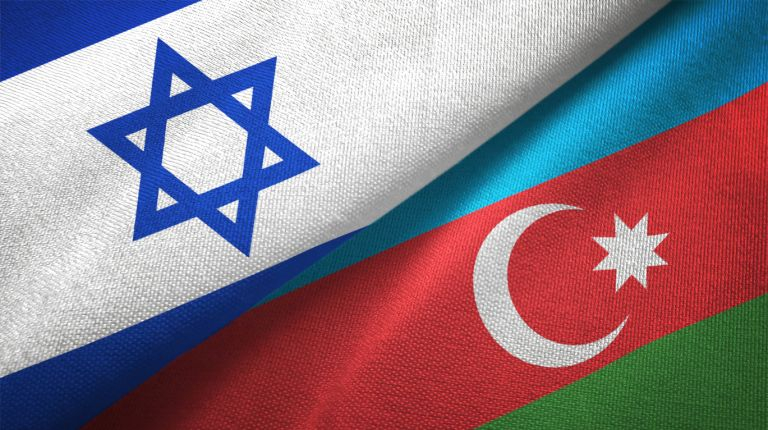
Israel’s recognition of the Armenian genocide may carry diplomatic costs that reach beyond Turkey.
Like a bolt from the blue on an otherwise quiet summer day, the Israeli government’s sudden decision to recognize the Armenian genocide committed by the Ottoman Empire in the early 20th century came as a surprise.
The initiative was introduced by Foreign Minister Gideon Sa’ar, who declared:
It is never too late to do the right thing.
This week, the government’s decision is expected to be submitted to the Knesset for approval.
Let us take a calm and objective look at why the Israeli government chose this particular moment to make such a decision.
A new architecture of influence is now taking shape before our very eyes across the Middle East.
US President Donald Trump is engaged in active negotiations with Iran, involving Qatar, Pakistan, and several Gulf states. At the same time, Washington is seeking to strengthen its relationship with Turkey.
This new regional reality is being shaped largely without Israel’s participation.
One might think that this – not events that occurred more than a century ago – should be the primary concern of Israel’s Foreign Ministry.
Because if you’re invited to lunch and you’re not sitting at the table, you’re on the menu.
Election seasonIsrael is heading toward elections this autumn.
Under such circumstances, every government seeks to demonstrate tangible achievements to its voters and prove that it is capable of pursuing an independent and effective policy.
In recent months, Israeli society has been deeply divided over a number of government initiatives that have sparked intense public debate.
These include legislation exempting one sector of the population from military service, proposed amendments to the Law of Return, restrictions affecting Reform Judaism, the so-called “Daycare Law,” as well as the continuing controversy surrounding judicial reform.
Each of these initiatives has both supporters and opponents. Yet they all share one important characteristic: they are primarily aimed at specific electoral constituencies whose support is crucial to the governing coalition.
Israel’s foreign policy presents an equally complicated picture. Relations with many countries remain, to put it mildly, strained. Opportunities to present the public with major diplomatic successes are currently rather limited.
Against this backdrop, recognizing a historical tragedy inevitably provokes a powerful emotional response and quickly becomes one of the day’s dominant political issues.
Yes, indeed – it is never too late to make the right decision.
Especially on the eve of an election.
Turkey’s reaction was not long in coming. Instead of softening their rhetoric, Turkish politicians, on the contrary, made their statements even harsher. Threats against Israel once again entered the public discourse, including statements about the future “liberation of Jerusalem” and the establishment of Turkish control over it.
Such rhetoric should not come as a surprise. Relations between Israel and Turkey are going through one of the deepest crises in the entire history of bilateral ties. Yet it is precisely in such periods that it becomes especially important to separate emotions from national interests.
Despite the public confrontation, there remain areas in which coordination between Israel and Turkey continues in one form or another.
This is periodically reported by both Israeli and foreign sources. In addition, Turkey remains one of the key players in Syria, effectively becoming Israel’s neighbor along its northern frontier.
Only a few decades ago, Israel and Turkey often acted as strategic partners, including by coordinating their positions on historical resolutions in international organizations. Today, little remains of that alliance.
At a time when tensions between the two states have reached such a high level, when emotions are boiling, and passions are inflamed, it is necessary to assess the situation coolly and act thoughtfully, carefully calculating the consequences of one’s actions.
What does Israel gain by delivering a sensitive diplomatic blow to Turkey precisely now?
If there is no strategic benefit, while the diplomatic risks are obvious, such a decision may, over time, turn into a “Turkish boomerang effect” for our country.
However, there is another participant in this story, one that is discussed in Israel far less often than it should be.
I am referring to Azerbaijan.
For many years, it was Azerbaijan that made serious efforts to preserve dialogue between Israel and Turkey. Largely thanks to Baku’s mediation efforts, the warming of relations between the two countries once became possible, as did the historic visit of Israel’s president to Turkey. Unfortunately, that warming proved short-lived.
According to information that has repeatedly circulated in expert and diplomatic circles, Azerbaijan also made significant efforts after the fall of Bashar Assad’s regime, seeking to prevent a direct clash of interests between Israel and Turkey in Syria.
Despite President Tayyip Erdogan’s extremely harsh rhetoric, oil from Baku continues to reach Israel through Turkish territory.
And Azerbaijan is the country that makes this possible.
After the tragedy of October 7, it was in Azerbaijan that people brought flowers to the Israeli Embassy. Azerbaijan preserved its relations with Israel despite the enormous pressure to which the country was subjected.
For me, this is not abstract politics.
This is my native country, where I was born and raised.
“Perhaps this is the only place in the world where they truly love us, ”an Israeli acquaintance of mine, upon visiting Baku for the first time, said:
Why does Azerbaijan, which has no connection whatsoever to events of a century ago, object to the adoption of such a decision?
I believe it is, first and foremost, because Baku fears the distortion of historical facts for political reasons. Baku also understands that such a step will inevitably be perceived in Turkey as a political signal and may lead to destabilization in an already troubled region.
In addition, decisions of this kind may strengthen revanchist forces within Armenia precisely at a time when efforts continue to conclude a final peace treaty between Azerbaijan and Armenia, while the process of normalizing Armenian-Turkish relations is also underway.
In Azerbaijan, the world is also reminded of the tragedy of the Azerbaijani city of Khojaly, where in 1992 Armenian armed formations massacred hundreds of civilians, including women, children, infants, and the elderly.
In Baku, it is believed that if the international community applies a consistent standard in assessing such crimes, then the Khojaly massacre deserves an appropriate international political and legal assessment as well.
Nevertheless, fully aware of Azerbaijan’s position, Israel chose a different course.
And this raises a question that, in my opinion, extends far beyond the government’s decision itself.
To what extent is it acceptable to disregard the position of one of Israel’s most reliable strategic partners for the sake of a decision whose practical benefit to Israel’s national interests is far from obvious?
Friends are not to be taken for granted.
Azerbaijan remains one of the very few reliable strategic partners Israel can still count on today.
There is a word in the Azerbaijani language: Kishilik.
It means more than a man’s honor. More than nobility.
Kishilik is a code of conduct. It is keeping one’s word. Respect for one’s partners. Personal dignity. Taking responsibility for one’s decisions. Remembering acts of kindness and appreciating those who stood by you in difficult times.
In my view, these very principles largely define the political philosophy of the leadership of the Republic of Azerbaijan. The way Azerbaijan treats its allies, respects the interests of its partners, and honors its commitments to its friends occupies a uniquely important place in the country’s political culture.
Perhaps this is one of the reasons why Azerbaijan’s authority and international standing continue to grow.
In Israel, the situation is different. Ours is, shall we say, more complicated – and not always, in my opinion, professionally sound.
Over the years, I have spoken with many people who held highly responsible positions. What struck me every time was how differently we sometimes perceive the importance of relations with our friends and allies.
I remember one occasion when the ambassador of a friendly country was inadvertently left off the guest list for an official ceremony at the Knesset.
When I expressed my surprise, I received an entirely sincere reply:
“Don’t worry. They’re our friends. They’ll understand.”
Later, I heard similar conversations more than once.
And now, following the government’s decision, I heard almost exactly the same words again.
“Don’t worry. They’ll understand us in Baku.”
Another interlocutor put it even more bluntly:
“We sell them weapons. Why are you so concerned?”
Perhaps such remarks are made without any ill intent.
Yet, in my opinion, they reveal one of the most dangerous mistakes of modern diplomacy.
True partnership does not exist by itself.
It cannot be sustained solely through mutual benefit, commercial contracts, oil supplies, arms sales, or joint projects.
All of these things are undoubtedly important.
But trust is even more important.
Understanding what matters to your friends is even more important.
That trust is built over years.
Sometimes over decades.
Sometimes over generations.
Yet it can be lost because of a single political decision.
After the tragedy of October 7, Azerbaijan was the only Muslim-majority country that openly maintained its strategic partnership with Israel despite enormous external pressure.
That was a conscious political choice, backed by remarkable determination.
It is precisely for this reason that Azerbaijan has every right to expect the same careful consideration on issues it regards as matters of principle.
That is how lasting alliances are built.
Political campaigns come to an end.
Elections come and go.
But allies remain.
Or they leave.
That is why any decision affecting the interests of Israel’s strategic partners should be made not only with today’s domestic political considerations in mind, but also with a clear understanding of the consequences it may have years from now.
After all, statesmanship is the art of thinking not only about the next election, but about the next generation.
Perhaps this, too, is part of the true meaning of the Azerbaijani word Kishilik.
The Jerusalem Post: https://www.jpost.com/opinion/article-901693
Tabriz Activist Mehrdad Qadiri Arrested
Trump Says US Will Reach an Outcome on Iran “One Way or the Other” Soon
Arabian Gulf oil exports exceed prewar levels despite Iranian attacks — WSJ
Renewed US-Israeli attacks on Iran remain possible, FT reports
Amnesty International Raises Alarm Over Executions in Iran
Anti-Azerbaijan Protest Held in Tehran
Political Prisoner Dies in Karaj Prison
Israel’s Foreign Minister Accuses Iran of Hypocrisy Over Comments on France’s Protest Crackdown
US Attack on Iran Possible, Araghchi Warns
IRGC Helping Direct Houthi Attacks, Media Reports
Saudi Arabia Accuses Iran of Fueling Increased Houthi Attacks
Kurdish Party Reasserts Territorial Claims Against Azerbaijan
Anti-Azerbaijan Protest Held in Mashhad
US Weighs Deploying ‘Mother of All Bombs’ in Potential Strikes on Iran – CNN
Women’s Basij Unit Commander Killed in Shooting in Sistan and Baluchestan
Iranian Police Shoot and Kill Three Civilians
Four More Prisoners Executed in Three Iranian Cities
Qatar’s Emir Accuses Iran of Violating the Country’s Sovereignty
Lake Urmia’s ecological balance remains unrestored, official says
Chinese Foreign Minister Wang Yi to Visit Azerbaijan
Anti-Azerbaijan Protest Held in Mashhad
US Weighs Deploying ‘Mother of All Bombs’ in Potential Strikes on Iran – CNN
Arabian Gulf oil exports exceed prewar levels despite Iranian attacks — WSJ
Saudi Arabia Accuses Iran of Fueling Increased Houthi Attacks
Al-Akhbar: US issues final warning to Iran over strikes on nuclear facilities
Anti-Azerbaijan Protest Held in Tehran
Kurdish Party Reasserts Territorial Claims Against Azerbaijan
Renewed US-Israeli attacks on Iran remain possible, FT reports
Israel’s Foreign Minister Accuses Iran of Hypocrisy Over Comments on France’s Protest Crackdown
Another Cleric Killed in Iran
Vance Says He and Trump Share the Same Approach to Military Action Against Iran
Israeli President: Azerbaijan is a very tolerant country, Baku taking important steps for international peace under such circumstances
IRGC Helping Direct Houthi Attacks, Media Reports
Iran Arrests 39 People Over January Protests
US Attack on Iran Possible, Araghchi Warns
Political Prisoner Dies in Karaj Prison
Amnesty International Raises Alarm Over Executions in Iran
Two Lawyers Arrested in Tabriz