

Iran’s ethnic minorities are the key to toppling the mullahs’ regime in Iran.
Trump Expected to Discuss Iran with Putin and Xi at Trilateral Talks in China Next Week
Israeli Military Preparing for Three Possible Scenarios of Renewed War with Iran – Channel 13
“The Jerusalem Post”: How to implement regime change in Iran - opinion
Iran's Population Could Decline Sharply, Officials Warn
Three More Prisoners Executed in Iran
UN Security Council Extends Sanctions Against Iran-Backed Houthis
Workers at Tabriz Machine Manufacturing Company Halt Work in Protest
Gas Shortages Expected in 11 Iranian Provinces This Winter
Israel Vows to Continue Military Action Against Iran When Necessary
Turkey, Pakistan and Iraq Oppose US Decision Regarding Iran
Ynet: Israel Preparing for a Different Kind of War with Iran
Trump Opts for Strategy to Economically Strangle Iran Rather Than Resume War or Pursue Deal – Axios
We Are in a State of Full-Scale War – Mohajerani
Israel Warns That Iran Poses a Threat Beyond the Middle East
Restrictions Imposed on Live Music Performances in Tabriz Restaurants
Retirees Hold Protests in Hamadan and Zanjan
Seven Arab Activists Arrested in Iran
Chinese Companies Accused of Providing Iran with Satellite Images of Azerbaijani Airports
Seven More Prisoners Executed in Three Cities
12 Iranian Security Personnel Killed in Five Days
Number of Executions in Iran This Year Revealed
Anti-Aircraft Guns Installed on Rooftops of Buildings in Tehran
Trump Weighs Options Between Renewed Strikes on Iran and Negotiations – Axios
Iran holds marches to mark anniversary of US embassy takeover
Iraq Deploys Troops Along Its Borders with Iran and Kuwait
Iranian Army Officer Killed in Armed Attack
Social Media Activists Arrested in Hamedan
Another Police Officer Killed in Iran
Trump Warns US Could Strike Iran's Pickaxe Mountain if Nuclear Deal Is Not Reached – Fox News
US Destroys IRGC Missile Launcher on Qeshm Island – Axios
Iran Deploys Missile Launchers Near Azerbaijani Border – Claim
US Deploys Dozens of Refuelling Aircraft to Israel Ahead of Possible Strikes on Iran
Three More Protesters to Be Executed in Iran
Iran Could Face Nuclear Strike, Carlson Says
Trump Plans to Resume Strikes on Iran After Midterm Elections – MS NOW
Pro-Iranian Activists Attempt Provocation Outside Azerbaijan’s Embassy in London
Explosions Heard Near the Strait of Hormuz – IRGC-Affiliated Media
Another Baloch Man Shot Dead in Iran
IRGC Colonel Reportedly Killed in Iran – Unconfirmed Reports
Iran May Burn Mazut at Power Plants This Winter if Energy Imports Fall Short
Nine More Prisoners Executed in Iran
Iranian Police Kill Another Baloch Man
Qazvin Activist Nemat Afshari Arrested
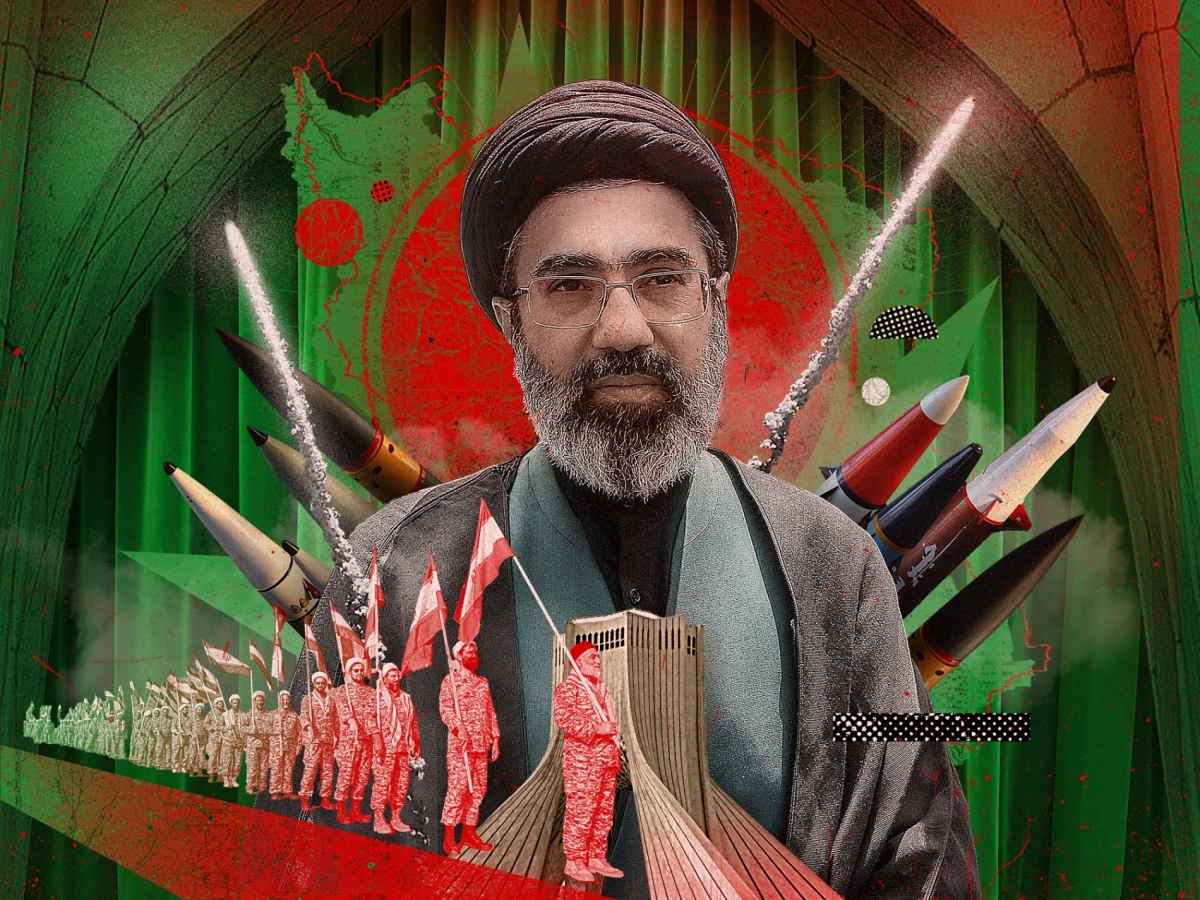
Iran’s ethnic minorities are the key to toppling the mullahs’ regime in Iran.
Although the United States and Israel are preoccupied with elections, the Iranian threat has not gone away.
The mullahs in Tehran continue to chant “Death to Israel” and “Death to America.” They seek to pursue nuclear weapons, despite the sanctions in place. They are doing everything they can to rebuild the Shia Crescent from the Red Sea to the Mediterranean Sea.
They are executing their own people en masse for the crime of dreaming about a better future for themselves and their children. For this reason, elections or no elections, we cannot stop seeking regime change in Iran. And these days, regime change is within the realm of possibility.
Atakan Araz, from the South Azerbaijani Republic Party, a member of the South Azerbaijan Statehood Council, stated in a recent interview: “Our assessment is that the Islamic Republic is currently facing an unprecedented combination of a legitimacy crisis, economic and structural erosion, external pressure, war, social discontent, and protests emerging across multiple centers.”
This makes the mullah’s regime more vulnerable at this time.
Araz continued: “It is true that a severe economic crisis or protests, on their own, do not necessarily mean the inevitable collapse of a regime. However, when they occur simultaneously and in combination with other factors, they can become effective levers for political change and the erosion of governing capacity.
“Recent efforts to strengthen mechanisms of control and repression may also indicate the ruling structure’s concern over increasing social risks and the possibility of political and structural collapse.”
Effectively changing the Iranian regime
Eldar Qaradaghi, chairman of the South Azerbaijan Liberation Party and a board member of the South Azerbaijan Statehood Council, emphasized: “A successful strategy for changing the Iranian regime must move on four fronts simultaneously: 1. Sustained military pressure and the fear of war; 2. Deep and impermeable sanctions; 3. Strategic pressure on the Persian (Arabian) Gulf and the Strait of Hormuz; and 4. Strengthening the political power of Iran’s non-Persian peoples.”
He explained that Iran cannot be understood only through Tehran: “Its economic, ecological, ethnic, religious, and social contradictions have become deeply intertwined, while the regime’s greatest instrument of control is not merely its nuclear or missile programs, but its ideological and propaganda system.
“For an authoritarian regime with limited economic resources, the continued threat of military action can create greater psychological pressure than war itself. At the same time, sanctions must be directed particularly at oil revenues, banking, logistics, and the networks used to circumvent restrictions.
“Decades of sanctions have shown that incomplete enforcement and alternative channels, particularly through China and Russia, can preserve the regime’s resilience. Sanctions that are imposed on one side and circumvented on the other ultimately strengthen Tehran’s position.”
However, another war may be needed if regime change is to be sought. That war might occur sooner rather than later. Nevertheless, it should be noted that this regime cannot be bombed into non-existence.
Israel and America will require boots on the ground to implement regime change, but those boots do not need to be US and Israeli troops, as many Iranian people seek regime change, principally among them Iran’s ethnic minority groups.
The role of the South Azerbaijani population
Savash Merendli, the representative of the South Azerbaijani Human Rights Centre, stressed that the regime’s oppression against minority groups has been widespread to the point that it constitutes cultural genocide. He also noted that the Pahlavi regime mistreated the South Azerbaijani population.
“We, at the South Azerbaijani Human Rights Center, call on the international community to recognize the ongoing oppression of South Azerbaijanis under the Iranian Persian regime,” he said.
“For more than 100 years, since the1925 collapse of the Qajar Empire, our people have faced systematic discrimination, humiliation, assimilation, and political repression under both the Pahlavi regime and the so-called Islamic Republic. Our Azerbaijani Turkish language was banned from formal education, our national identity and history marginalized, and millions of South Azerbaijanis assimilated.
“Whenever our people have risen to defend their rights, they have been brutally suppressed. Tens of thousands were killed in the suppression of the 1945-46 Azerbaijan National Government and other uprisings during both the Pahlavi and Islamic periods.”
Javad Ranjbar, a board member at the South Azerbaijan National Statehood Council and a representative of the South Azerbaijan Student Union, said: “In our view, nearly half a century of experience under the Islamic Republic of Iran has demonstrated that the existing political system has failed to provide adequate legal and institutional mechanisms for democratic political participation, national rights, and fundamental freedoms.
“The violent suppression of political, national, and social protests, political imprisonment, executions, and the use of lethal force against protesters have raised serious concerns under international human rights standards.”
The need for a democratic system
However, Ranjbar believes that it is of critical importance that the current mullah’s regime is replaced with a more democratic system and not another authoritarian government. For that reason, he objects to Reza Pahlavi taking over Iran.
“In our historical memory, Pahlavi rule is associated with extreme centralization of power, political repression, and policies directed against the identity, language, and national rights of non-Persian peoples, including the Azerbaijani people,” he said.
“From our perspective, Reza Pahlavi has not made a clear and convincing break with these aspects of the political record and legacy of his father and grandfather; rather, in many of his positions, he has continued to defend that political legacy.
“Furthermore, his positions regarding the right of non-Persian peoples to self-determination, their national rights, linguistic rights, and mother-tongue education have failed to earn the confidence of South Azerbaijani political forces. We therefore cannot accept replacing the Islamic Republic with a system that reproduces the same logic of centralization and disregard for the rights of non-Persian peoples in a different form.”
According to Ranjbar, “Today, Turks, particularly Azerbaijani Turks, constitute the largest national community in the geography known as Iran. Therefore, no sustainable, successful, and democratically legitimate political change can take place without their active participation and political will. The same principle must apply to Baloch, Arabs, Kurds, and other non-Persian peoples.”
He noted that “South Azerbaijani political organizations are prepared to cooperate both with the political organizations of these peoples and with democratic Persian opposition forces in pursuing a transition from the Islamic Republic, but such cooperation must be founded upon clear and mutually accepted principles.
“The first and most fundamental of these is recognition of the right of peoples to self-determination. This must be followed by legally guaranteed rights to education in one’s mother tongue and its free use in public life, equal political participation, and other fundamental national and civil rights.”
Ranjbar stressed that “cooperation among the political organizations of non-Persian peoples must likewise be based on mutual respect and the rejection of territorial claims against one another, including territorial claims against the cities and territories of South Azerbaijan. If these principles are mutually recognized, I believe there is a genuine possibility of building broad and legitimate political cooperation among forces seeking an end to the Islamic Republic.”
A coalition of South Azerbaijanis, Turkmen, Baloch, Kurds, Ahwazi Arabs, Lors, and other ethnic minority groups can fight to topple the regime on the ground. At the same time, Israel and America could provide air support.
And this time, US President Donald Trump should fight until the job gets done, instead of stopping in the middle, as the Iranian threat will not cease until this regime is toppled.
The writer is the CEO of the Dona Gracia Center for Diplomacy and an Israel-based journalist. She is the author of Women and Jihad: Debating Palestinian Female Suicide Bombings in the American, Israeli and Arab Media.
NOVEMBER 4, 2026
By RACHEL AVRAHAM
The writer is the CEO of the Dona Gracia Center for Diplomacy and an Israel-based journalist. She is the author of Women and Jihad: Debating Palestinian Female Suicide Bombings in the American, Israeli and Arab Media.
Israeli Military Preparing for Three Possible Scenarios of Renewed War with Iran – Channel 13
“The Jerusalem Post”: How to implement regime change in Iran - opinion
UN Security Council Extends Sanctions Against Iran-Backed Houthis
Workers at Tabriz Machine Manufacturing Company Halt Work in Protest
Gas Shortages Expected in 11 Iranian Provinces This Winter
Turkey, Pakistan and Iraq Oppose US Decision Regarding Iran
Trump Opts for Strategy to Economically Strangle Iran Rather Than Resume War or Pursue Deal – Axios
We Are in a State of Full-Scale War – Mohajerani
Restrictions Imposed on Live Music Performances in Tabriz Restaurants
Retirees Hold Protests in Hamadan and Zanjan
Seven Arab Activists Arrested in Iran
Chinese Companies Accused of Providing Iran with Satellite Images of Azerbaijani Airports
Seven More Prisoners Executed in Three Cities
12 Iranian Security Personnel Killed in Five Days
Anti-Aircraft Guns Installed on Rooftops of Buildings in Tehran
Trump Weighs Options Between Renewed Strikes on Iran and Negotiations – Axios
Iraq Deploys Troops Along Its Borders with Iran and Kuwait
Iranian Army Officer Killed in Armed Attack
Trump Warns US Could Strike Iran's Pickaxe Mountain if Nuclear Deal Is Not Reached – Fox News
Iran Deploys Missile Launchers Near Azerbaijani Border – Claim
Chinese Companies Accused of Providing Iran with Satellite Images of Azerbaijani Airports
Turkey, Pakistan and Iraq Oppose US Decision Regarding Iran
12 Iranian Security Personnel Killed in Five Days
Ynet: Israel Preparing for a Different Kind of War with Iran
Restrictions Imposed on Live Music Performances in Tabriz Restaurants
Retirees Hold Protests in Hamadan and Zanjan
We Are in a State of Full-Scale War – Mohajerani
Seven More Prisoners Executed in Three Cities
Trump Opts for Strategy to Economically Strangle Iran Rather Than Resume War or Pursue Deal – Axios
“The Jerusalem Post”: How to implement regime change in Iran - opinion
Seven Arab Activists Arrested in Iran
Israel Warns That Iran Poses a Threat Beyond the Middle East
Israel Vows to Continue Military Action Against Iran When Necessary
Iran's Population Could Decline Sharply, Officials Warn
Workers at Tabriz Machine Manufacturing Company Halt Work in Protest
UN Security Council Extends Sanctions Against Iran-Backed Houthis
Gas Shortages Expected in 11 Iranian Provinces This Winter
Three More Prisoners Executed in Iran