

The National Interest: Azerbaijan could play a critical role in ongoing peace efforts in the Middle East—particularly in engagement with neighboring Iran.
38 Women and Children Killed in Iran Over Two Months
Tabriz Activist Mehrdad Qadiri Arrested
Iran’s Oil Reserves Stored on Tankers Run Dry Amid US Blockade – WSJ
Trump Says US Will Reach an Outcome on Iran “One Way or the Other” Soon
Al-Akhbar: US issues final warning to Iran over strikes on nuclear facilities
Arabian Gulf oil exports exceed prewar levels despite Iranian attacks — WSJ
Renewed US-Israeli attacks on Iran remain possible, FT reports
Two Lawyers Arrested in Tabriz
Amnesty International Raises Alarm Over Executions in Iran
Anti-Azerbaijan Protest Held in Tehran
Political Prisoner Dies in Karaj Prison
Iran Arrests 39 People Over January Protests
Israel’s Foreign Minister Accuses Iran of Hypocrisy Over Comments on France’s Protest Crackdown
US Attack on Iran Possible, Araghchi Warns
Vance Says He and Trump Share the Same Approach to Military Action Against Iran
IRGC Helping Direct Houthi Attacks, Media Reports
Saudi Arabia Accuses Iran of Fueling Increased Houthi Attacks
Another Cleric Killed in Iran
Kurdish Party Reasserts Territorial Claims Against Azerbaijan
Anti-Azerbaijan Protest Held in Mashhad
Israeli President: Azerbaijan is a very tolerant country, Baku taking important steps for international peace under such circumstances
US Weighs Deploying ‘Mother of All Bombs’ in Potential Strikes on Iran – CNN
Islamic Republic Could Fall Under These Circumstances – Ardestani
Women’s Basij Unit Commander Killed in Shooting in Sistan and Baluchestan
Iranian Police Shoot and Kill Three Civilians
Four More Prisoners Executed in Three Iranian Cities
Qatar’s Emir Accuses Iran of Violating the Country’s Sovereignty
Lake Urmia’s ecological balance remains unrestored, official says
WSJ: Iran threatens to deploy troops into neighboring countries as it prepares for renewed war
Chinese Foreign Minister Wang Yi to Visit Azerbaijan
Israeli President Isaac Herzog to Visit Azerbaijan
Hundreds of armed fighters sent into Iran, state-linked media reports
Iran’s Supreme Court Upholds Death Sentence of Another Political Prisoner
Armed Clashes in Iran Leave Dead
Isfahan Judiciary Chief Threatens Women Who Do Not Wear Hijab
Ideological Centers in Iran Call for Provocations in Azerbaijan
Mirsalim: Iran’s Oil Belongs to God and the Prophet
US Report: Iran’s IRGC Recruits Children as Young as 12 for Security Missions
Iran sentences another protester to death
Three-day strike plan against Iran presented to Trump
Police Major Shot Dead in Iran’s Sistan and Baluchestan Province
Police arrest 16 people in operation across Tabriz
Iran targets Kurdish bases in northern Iraq
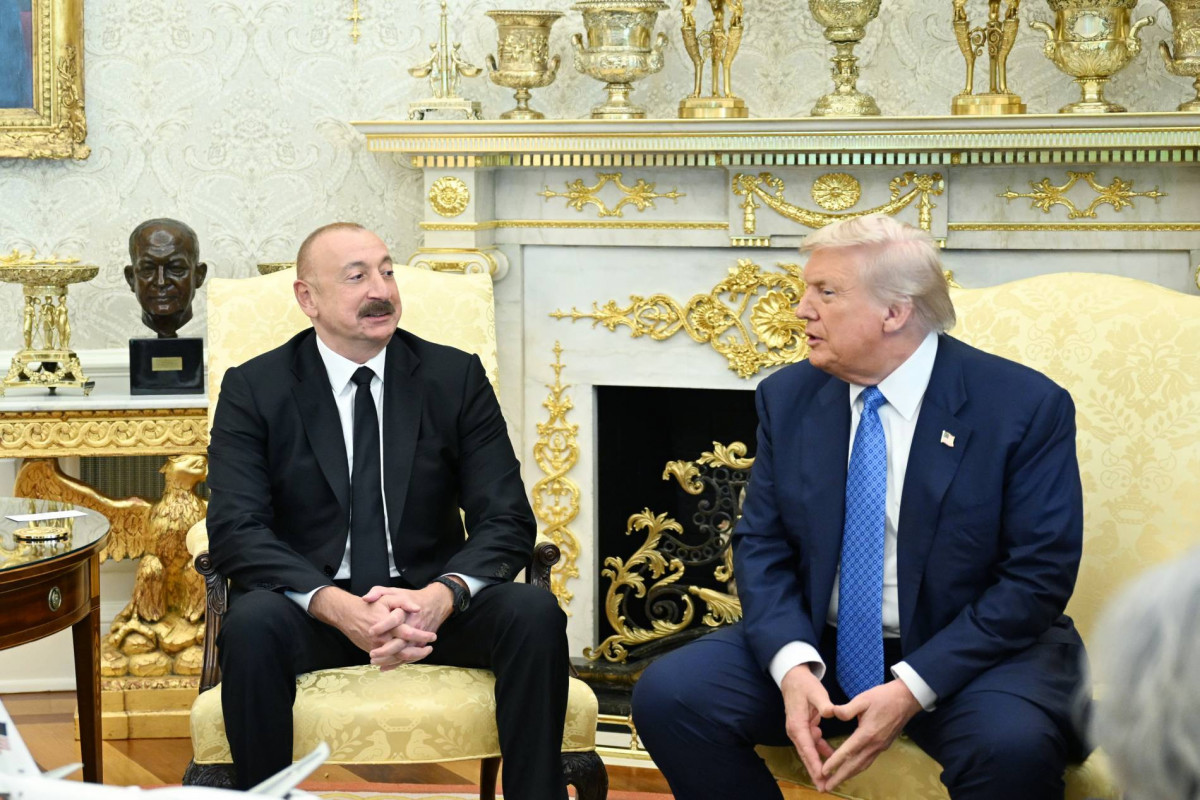
The National Interest: Azerbaijan could play a critical role in ongoing peace efforts in the Middle East—particularly in engagement with neighboring Iran.
At the inaugural session of the Board of Peace on February 19, US president Donald Trump is expected to outline a Gaza reconstruction plan and a UN-mandated stabilization force to secure the enclave. Representatives from at least 20 states, including several national leaders, are expected in Washington. A key focus will be the establishment of a multi-billion-dollar fund that pools member contributions for post-conflict recovery. US officials say Trump will also announce which states have pledged thousands of troops for the multinational force in Gaza.
One month into President Trump’s second term, I argued in “The US Geostrategy and the Old World Order” that the United States had begun a historic recalibration of its foreign-policy doctrine. This transformation was long in the making, shaped by three decades of geopolitical realities since the Soviet Union’s collapse in 1991. I noted that shifts of this magnitude rarely proceed smoothly, producing a turbulent transition as institutions, alliances, and assumptions resist change. While instability is inherent to systemic realignment, addressing new threats with outdated frameworks is increasingly untenable and risky.
For the United States to pursue a geostrategy of global management through burden-sharing and burden-shifting, Washington must first resolve legacy conflicts that limit flexibility. The Middle East remains the most complex, with the Trump Administration focusing on the Board of Peace approach centered on Gaza. The initiative aims to end a regional war and build a coalition to assume long-term security, stabilization, and reconstruction responsibilities. Yet developments within and about Iran could complicate the plan, potentially requiring support from states beyond the region—most notably Azerbaijan.
Operationalizing this approach requires careful diplomacy with key regional players, particularly Turkey, Saudi Arabia, and Israel, as well as the United Arab Emirates, Qatar, Egypt, and Jordan. Resolving conflicts among them helps align allies capable of assuming most security and stabilization responsibilities. Turkey and Saudi Arabia are central to this approach, ideally coordinated with Israel. Yet diverging Turkish and Israeli interests, Saudi Arabia’s retreat from normalization efforts with Israel, and Saudi-UAE divergence complicate a coherent regional strategy.
The regional calculus is further complicated by Iran’s geopolitical fragility. Ongoing American diplomacy faces mounting strains as factional divisions in Tehran deepen, reflected in the weakening of the Islamic Revolutionary Guard Corps and the growing influence of the Artesh. These dynamics have prompted the deployment of a second US carrier strike group, heightening the risk of renewed conflict. Washington is attempting to guide the region toward post-conflict stabilization even as the possibility of confrontation with Iran persists.
Reconciling Turkey and Saudi Arabia with Israel while managing tensions with Iran will require skillful statecraft from the Trump administration. Azerbaijan is well-positioned to assist due to its unique diplomatic ties. It maintains close relations with Turkey, the UAE, and Israel, while also engaging Saudi Arabia. Washington can leverage Baku as a key intermediary to coordinate regional actors.
Azerbaijan has already demonstrated both the intent and capability to act as a strategic intermediary in the Middle East. It has hosted deconfliction talks between Turkey and Israel, underscoring its readiness to bridge regional divides. Baku has also served as a conduit between Israel and the new regime in Syria, exemplified by Ahmed al-Shara’s visit to Baku. Its participation in the Board of Peace further highlights the country’s growing diplomatic importance.
An unparalleled combination of geographic, historical, and sociopolitical factors confers exceptional leverage on Azerbaijan. Positioned along Iran’s northwestern frontier, it borders provinces with large ethnic Azeri populations whose cultural ties to Baku remain strong. Azerbaijan’s secular model, combined with the Iranian Azeris’ presence in senior state and military roles, offers the United States a potential window into Iran’s internal dynamics. Leveraging these connections, Baku could support stabilization efforts and help shape Tehran’s behavior amid ongoing diplomacy and security pressure.
Vice President JD Vance’s Feb. 10–11 visit to Baku advanced US geostrategy by formalizing Azerbaijan’s role in regional stabilization. The two countries signed a Strategic Partnership Charter, committing to enhanced maritime security and economic connectivity. The visit underscores Baku’s strategic value as US lawmakers consider repealing Section 907 of the 1992 Freedom Support Act. Originally enacted during the 1988–94 Armenia-Azerbaijan war and supported by diaspora lobbying, 907 is now largely obsolete following the 2020–23 conflict and the August 2025 peace deal brokered by the Trump administration.
It remains a barrier to expanding American-Azerbaijani ties envisioned in the Strategic Charter signed by Vance. The Armenian National Committee of America’s effort to preserve the restriction is increasingly anachronistic and counterproductive to the very community it seeks to serve. Profound changes in Armenia’s own interests, regional geopolitics, and American global strategy have altered the landscape. Overcoming Cold War–era constraints is essential for Washington to operationalize its new geostrategy in the Middle East and West Asia.
Tabriz Activist Mehrdad Qadiri Arrested
Trump Says US Will Reach an Outcome on Iran “One Way or the Other” Soon
Arabian Gulf oil exports exceed prewar levels despite Iranian attacks — WSJ
Renewed US-Israeli attacks on Iran remain possible, FT reports
Amnesty International Raises Alarm Over Executions in Iran
Anti-Azerbaijan Protest Held in Tehran
Political Prisoner Dies in Karaj Prison
Israel’s Foreign Minister Accuses Iran of Hypocrisy Over Comments on France’s Protest Crackdown
US Attack on Iran Possible, Araghchi Warns
IRGC Helping Direct Houthi Attacks, Media Reports
Saudi Arabia Accuses Iran of Fueling Increased Houthi Attacks
Kurdish Party Reasserts Territorial Claims Against Azerbaijan
Anti-Azerbaijan Protest Held in Mashhad
US Weighs Deploying ‘Mother of All Bombs’ in Potential Strikes on Iran – CNN
Women’s Basij Unit Commander Killed in Shooting in Sistan and Baluchestan
Iranian Police Shoot and Kill Three Civilians
Four More Prisoners Executed in Three Iranian Cities
Qatar’s Emir Accuses Iran of Violating the Country’s Sovereignty
Lake Urmia’s ecological balance remains unrestored, official says
Chinese Foreign Minister Wang Yi to Visit Azerbaijan
Anti-Azerbaijan Protest Held in Mashhad
US Weighs Deploying ‘Mother of All Bombs’ in Potential Strikes on Iran – CNN
Arabian Gulf oil exports exceed prewar levels despite Iranian attacks — WSJ
Saudi Arabia Accuses Iran of Fueling Increased Houthi Attacks
Al-Akhbar: US issues final warning to Iran over strikes on nuclear facilities
Anti-Azerbaijan Protest Held in Tehran
Kurdish Party Reasserts Territorial Claims Against Azerbaijan
Renewed US-Israeli attacks on Iran remain possible, FT reports
Israel’s Foreign Minister Accuses Iran of Hypocrisy Over Comments on France’s Protest Crackdown
Another Cleric Killed in Iran
Vance Says He and Trump Share the Same Approach to Military Action Against Iran
Israeli President: Azerbaijan is a very tolerant country, Baku taking important steps for international peace under such circumstances
IRGC Helping Direct Houthi Attacks, Media Reports
Iran Arrests 39 People Over January Protests
US Attack on Iran Possible, Araghchi Warns
Political Prisoner Dies in Karaj Prison
Amnesty International Raises Alarm Over Executions in Iran
Two Lawyers Arrested in Tabriz