

It is critical to note that Iran is a multi-ethnic country, populated by Persians, Azerbaijanis, Kurds, Turks, Lors, Baloch, Ahvazis, and a variety of other ethnic groups.
Mirsalim: Iran’s Oil Belongs to God and the Prophet
US Report: Iran’s IRGC Recruits Children as Young as 12 for Security Missions
Iran sentences another protester to death
Three-day strike plan against Iran presented to Trump
Police Major Shot Dead in Iran’s Sistan and Baluchestan Province
Police arrest 16 people in operation across Tabriz
Iran targets Kurdish bases in northern Iraq
Putin pledges support to Pezeshkian amid Middle East tensions
Latest figures show changes in Lake Urmia’s water levels
US imposes sanctions on 17 vessels and companies over Iran
Iranian Court Sentences Social Media Activist to Death
Police Officer Killed in Attack Near Zahedan
Police Station Attacked in Iran
Pentagon orders CENTCOM to prepare for possible renewed major strikes on Iran — Axios
Two More Civilians Killed in Zahedan
Vance: Tehran must reduce uranium enrichment to end the war
Trump says Strait of Hormuz belongs to the United States
Two more protesters sentenced to death in Iran
Iranian police killed civilian in Isfahan
Yemen condemns Iran-backed Houthi attacks on Saudi Arabia
Police Allegedly Kill Azerbaijani Young Man in Varzegan
Trump Says Iran Is Responsible for Attempt to Hijack Plane
Hormuz Oil Flows Recover — WSJ
Armed Attack on Border Guards in Iran — One Killed, Two Injured
Netanyahu: Iran’s Leadership Is Fighting for Its Survival and Will Eventually Collapse
Two Police Officers Killed in Iran
Power Outages in Iran to Increase Due to Gas Shortage
Saudi Arabia May Launch Major Operation
Five Prisoners Executed in Three Cities of South Azerbaijan
“This Is Inequality” — Jailé
Trump: Iran Conflict Could End Before Midterm Elections
US Imposes Sanctions on Dozens of Companies Linked to Iran
Three More Protesters in Iran Sentenced to Death
Ardabil Woman Activist Sentenced to Prison and Flogging
Discrimination Against Minorities in Iran Has Also Spread to the Judicial System — Sato
Abbas Lisani denied access to medical treatment
Police post attacked in Sistan and Baluchistan; one killed
Nine more prisoners executed in three Iranian cities
Historic bridge in Ardabil left neglected
Additional restrictions imposed on female prisoners in Tehran
UAE: We reject Iran’s continued occupation of the three islands
Iran ranks highest for racial prejudice among 24 countries, study finds
Social media activist arrested in Qazvin
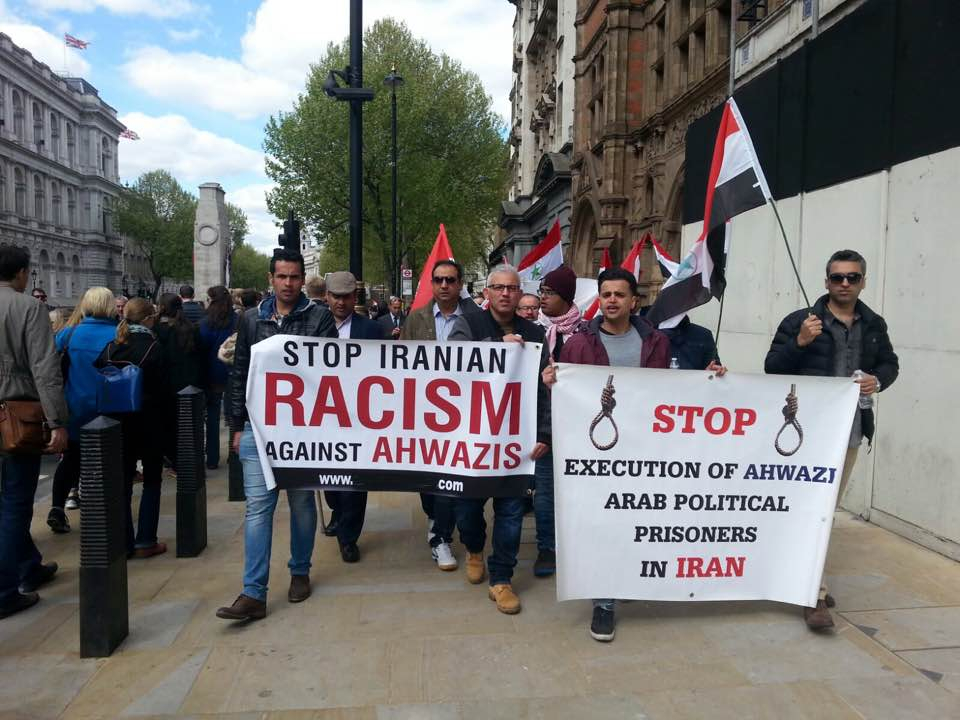
It is critical to note that Iran is a multi-ethnic country, populated by Persians, Azerbaijanis, Kurds, Turks, Lors, Baloch, Ahvazis, and a variety of other ethnic groups.
Reports are circulating that Defense Minister Israel Katz supported the idea of Israel helping the Kurds lead a ground invasion of the Islamic Republic of Iran, providing the Kurds not only with a no-fly zone but constant backing from the sky as they advanced.
Apparently, various reports claim that the only reason why the deal was not implemented was due to opposition from the Trump administration.
While some claimed that Turkish President Recep Tayyip Erdogan got to US President Donald Trump and that is the only reason why the deal did not go forward, other Iran experts argued that perhaps the fact that the plan did not move forward was a blessing in disguise, if the goal is to create a broad coalition among the opposition, which will lead to regime change.
It is critical to note that Iran is a multi-ethnic country, populated by Persians, Azerbaijanis, Kurds, Turks, Lors, Baloch, Ahvazis, and a variety of other ethnic groups.
If the Iranian regime is going to be successfully toppled, all of the ethnic minority groups together with the Persians opposed to the regime need to unite and fight together.
However, up until now, unity has not happened because there is no unified opposition leadership.
While former Crown Prince Reza Pahlavi likes to portray himself as the unified opposition leader, the reality remains that he is highly unpopular among Iran’s ethnic minority groups and is not even that popular among Persians opposed to the regime who live in Iran.
Indeed, most Iranians opposed to the regime would like to see Iran blossom as a liberal, secular, and decentralized federal democracy, and have zero desire to resurrect the monarchy. However, just because most Iranians reject the idea of Pahlavi returning does not mean that most Iranians want to see the Kurds take over, either.
Pinar Shaker, head of the National South Azerbaijan Statehood Council, stated in an interview that there have been tensions between Kurds and South Azerbaijanis, thus creating infighting which harms the goal of regime change.
“Relations between South Azerbaijani movements and certain Kurdish political organizations have been marked by persistent challenges,” she said.
“In my assessment, the principal source of these tensions lies in territorial claims advanced by some Kurdish groups concerning areas regarded by South Azerbaijani activists as part of the historical territory of South Azerbaijan.
“This issue has significantly constrained the development of mutual trust and long-term cooperation between the two sides.”
She continued: “Differences in methods of political struggle constitute another major source of disagreement. South Azerbaijani political actors have predominantly emphasized civil, political, and nonviolent forms of mobilization.
“By contrast, numerous Kurdish organizations have historically incorporated armed struggle into their political strategies.
“According to the perspective of many South Azerbaijani activists, this approach has, at times, resulted in harm to Azerbaijani civilians and has adversely affected relations between the two communities.”
Shaker noted, “It may be argued that the reliance of certain Kurdish organizations on armed methods has contributed to their receiving greater political and media attention from some Western governments, including the United States, Israel, and several European countries, than the predominantly civil and political movements of South Azerbaijan.
“Nevertheless, recent regional developments suggest that the practical influence of these groups does not necessarily correspond to the level of international attention they receive.”
In fact, up to 40% of the Iranian population is of either South Azerbaijani or Turkic descent. For centuries, Iran’s rulers were of Turkic origin. Only since the ascent of the Pahlavis did the Persians take over the country.
Thus, it is impossible to have a conversation about Iran without considering South Azerbaijanis, Turks, and other Turkic peoples that live in the region.
Sadig Isabeyli, head of the Savalan Research Center and Member of the Board of Directors of the South Azerbaijan National Liberation Front, proclaimed: “South Azerbaijan is not just a geographical name; it is a deep-rooted bearer of statehood memory, political organization tradition, and historical continuity, and has always been the protector of contemporary, human values.”
“The influence of South Azerbaijan is reflected not only in its demographics or geographical location, but also in the political consciousness and contemporary experience of statehood it has developed over the past hundred years,” he said.
“South Azerbaijan has never been passive spectators of historical processes during these periods but has repeatedly been the driving force that changed the political course of the region,” he continued.
“The Constitutional Movement that took place at the beginning of the 20th century (1905-1911) is the most vivid proof of this force.
“During those times, all parts of South Azerbaijan, led by Tabriz, were not just witnesses of the events taking place in the country but were the main center where constitutional thought was born, and political change was directed.
“This fact alone proves that South Azerbaijan played a structuring role in historical processes,” he said.
According to Isabeyli, “This political tradition became even more concrete during the National Government established under the leadership of Sayyed Ja’far Pishevari in 1945.
“Although short-lived, this government created a real, lived example of local governance, socio-political representation, and national-cultural rights – proving, not in words, but in deeds, that self-government of nations on democratic grounds is entirely possible in the political geography called Iran.”
“As Pishevari repeatedly emphasized in his statements and speeches, the result of the Azerbaijani freedom movement was not limited to the salvation of one province – he saw it as a manifesto of freedom and an exemplary model for other nationalities living there,” Isabeyli continued.
“In his opinion, the establishment of Azerbaijani provincial and regional councils and the achievement of internal freedoms not only decided the fate of Azerbaijani regions but also showed a practical way for other nationalities living in Iran to escape from the chains of tyranny,” he said.
“Pishevari, the leader of the South Azerbaijan National Government, viewed the liberation of South Azerbaijan from the reactionary pressure of the Tehran-based government as a gateway to freedom not only for Azerbaijan but also for other nations,” he continued.
“While explaining the concept of democratic power and freedom, he firmly stated that the nations living in Iran should not accept centralized forms of slavery and oppression,” he said, “and that the goal of the Azerbaijani National Government is to stop the oppressive policy of centralized forces and restore the political representation of nations based on the principle of self-determination.
“The principle underlying this approach was clear: the Azerbaijani National Government wanted to set a precedent with the democratic self-government structure it had created, so that other nations living in Iran’s political geography would be inspired by this model and achieve socio-political freedoms, thus forming a unified, democratic alternative to centralized politics in Tehran,” Isabeyli concluded.
What Pishevari envisioned should be the model of successful regime change. All of Iran’s ethnic groups, together with the Persian opposition, must join forces, work together, and fight against this regime together, despite their differences in outlook.
Instead of having one leader, like Pahlavi, imposed from the outside, there should be a coalition of leaders working jointly from the inside to topple the regime.
While the Kurds definitely should play a role in toppling the regime, they should not be leading an invasion.
Rather, all of the Iranian ethnic groups, including the Kurds, should be leading an uprising and fighting to topple the regime from within, to create a secular, liberal, decentralized, and federal Iran, which respects minority rights, women’s rights, and human rights.
Some nations can also have the option of breaking off and forming their own country after the dust settles, but they should put that aspiration aside for now so they can work jointly with all of the peoples of Iran to topple this regime.
Of course, Israel can support them from the sky, but one ethnic group should not be preferred over another. Rather, everyone must work together as a team to ensure that the regime falls once and for all.
Author: Rachel Avraham
https://www.jpost.com/opinion/article-901452
Iran sentences another protester to death
Police Major Shot Dead in Iran’s Sistan and Baluchestan Province
Iran targets Kurdish bases in northern Iraq
Latest figures show changes in Lake Urmia’s water levels
Iranian Court Sentences Social Media Activist to Death
Police Station Attacked in Iran
Pentagon orders CENTCOM to prepare for possible renewed major strikes on Iran — Axios
Two More Civilians Killed in Zahedan
Trump says Strait of Hormuz belongs to the United States
Iranian police killed civilian in Isfahan
Police Allegedly Kill Azerbaijani Young Man in Varzegan
Armed Attack on Border Guards in Iran — One Killed, Two Injured
Netanyahu: Iran’s Leadership Is Fighting for Its Survival and Will Eventually Collapse
Power Outages in Iran to Increase Due to Gas Shortage
Five Prisoners Executed in Three Cities of South Azerbaijan
“This Is Inequality” — Jailé
Ardabil Woman Activist Sentenced to Prison and Flogging
Police post attacked in Sistan and Baluchistan; one killed
Nine more prisoners executed in three Iranian cities
UAE: We reject Iran’s continued occupation of the three islands
Netanyahu: Iran’s Leadership Is Fighting for Its Survival and Will Eventually Collapse
Police Major Shot Dead in Iran’s Sistan and Baluchestan Province
Two Police Officers Killed in Iran
Power Outages in Iran to Increase Due to Gas Shortage
Hormuz Oil Flows Recover — WSJ
Police Officer Killed in Attack Near Zahedan
Armed Attack on Border Guards in Iran — One Killed, Two Injured
Two More Civilians Killed in Zahedan
Police Station Attacked in Iran
Three-day strike plan against Iran presented to Trump
Yemen condemns Iran-backed Houthi attacks on Saudi Arabia
Iranian Court Sentences Social Media Activist to Death
Police Allegedly Kill Azerbaijani Young Man in Varzegan
Iran targets Kurdish bases in northern Iraq
Vance: Tehran must reduce uranium enrichment to end the war
Police arrest 16 people in operation across Tabriz
Trump Says Iran Is Responsible for Attempt to Hijack Plane
Two more protesters sentenced to death in Iran