

Iran is threatening the Caucasian country’s efforts to boost energy and trade connectivity between Europe and Central Asia.
79 Prisoners Executed in Iran in One Month
UN Iran Rapporteur Says War Has Deepened Repression in the Country
Unemployment Rises in Iran Following War, MP Says
Latest Update on Lake Urmia’s Condition
Trump Considers Renewed Strikes on Iran After Midterm Elections – The Atlantic
38 Women and Children Killed in Iran Over Two Months
Tabriz Activist Mehrdad Qadiri Arrested
Iran’s Oil Reserves Stored on Tankers Run Dry Amid US Blockade – WSJ
Trump Says US Will Reach an Outcome on Iran “One Way or the Other” Soon
Al-Akhbar: US issues final warning to Iran over strikes on nuclear facilities
Arabian Gulf oil exports exceed prewar levels despite Iranian attacks — WSJ
Renewed US-Israeli attacks on Iran remain possible, FT reports
Two Lawyers Arrested in Tabriz
Amnesty International Raises Alarm Over Executions in Iran
Anti-Azerbaijan Protest Held in Tehran
Political Prisoner Dies in Karaj Prison
Iran Arrests 39 People Over January Protests
Israel’s Foreign Minister Accuses Iran of Hypocrisy Over Comments on France’s Protest Crackdown
US Attack on Iran Possible, Araghchi Warns
Vance Says He and Trump Share the Same Approach to Military Action Against Iran
IRGC Helping Direct Houthi Attacks, Media Reports
Saudi Arabia Accuses Iran of Fueling Increased Houthi Attacks
Another Cleric Killed in Iran
Kurdish Party Reasserts Territorial Claims Against Azerbaijan
Anti-Azerbaijan Protest Held in Mashhad
Israeli President: Azerbaijan is a very tolerant country, Baku taking important steps for international peace under such circumstances
US Weighs Deploying ‘Mother of All Bombs’ in Potential Strikes on Iran – CNN
Islamic Republic Could Fall Under These Circumstances – Ardestani
Women’s Basij Unit Commander Killed in Shooting in Sistan and Baluchestan
Iranian Police Shoot and Kill Three Civilians
Four More Prisoners Executed in Three Iranian Cities
Qatar’s Emir Accuses Iran of Violating the Country’s Sovereignty
Lake Urmia’s ecological balance remains unrestored, official says
WSJ: Iran threatens to deploy troops into neighboring countries as it prepares for renewed war
Chinese Foreign Minister Wang Yi to Visit Azerbaijan
Israeli President Isaac Herzog to Visit Azerbaijan
Hundreds of armed fighters sent into Iran, state-linked media reports
Iran’s Supreme Court Upholds Death Sentence of Another Political Prisoner
Armed Clashes in Iran Leave Dead
Isfahan Judiciary Chief Threatens Women Who Do Not Wear Hijab
Ideological Centers in Iran Call for Provocations in Azerbaijan
Mirsalim: Iran’s Oil Belongs to God and the Prophet
US Report: Iran’s IRGC Recruits Children as Young as 12 for Security Missions
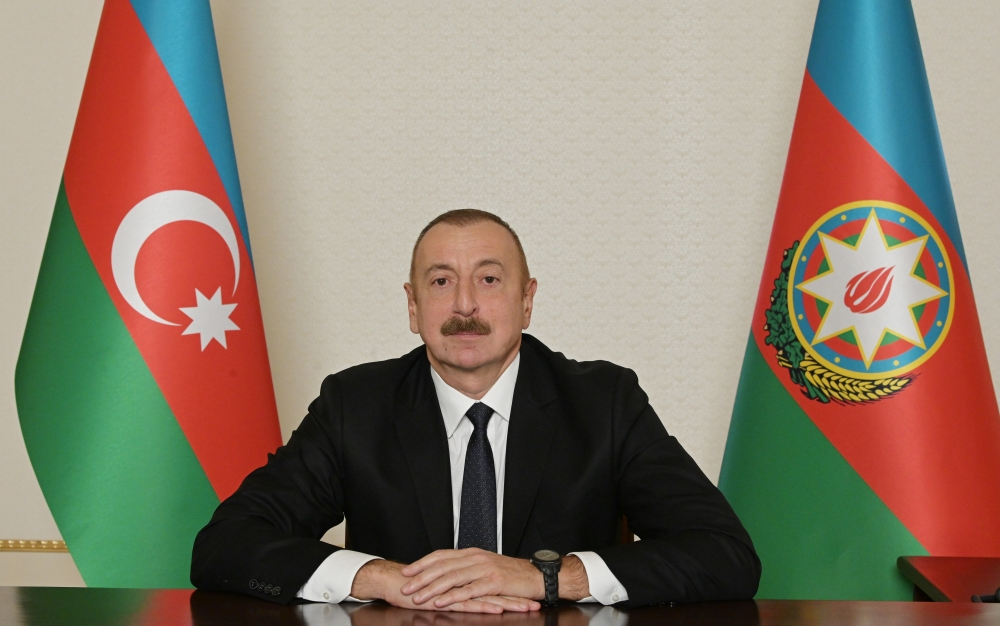
Iran is threatening the Caucasian country’s efforts to boost energy and trade connectivity between Europe and Central Asia.
After two Iranian drones struck Azerbaijan’s Nakhichevan exclave last week, Azerbaijani President Ilham Aliyev demanded that Tehran apologize and punish those responsible. Threatening to respond with an “iron fist” if it refused, he ordered the armed forces to prepare “retaliatory measures.”
The White House quickly condemned the strikes, declaring: “Attacks on the territory of our partners in the region are unacceptable and will be met with resolute US support for those partners.” The keyword in that statement is partner.
For years, Washington avoided such language when speaking about Baku. This shift in characterization is no accident, and it reflects an alignment that transcends the immediate crisis. America is drafting a new strategic map—tracing a line from Central Asia through the Caucasus to Europe—and Azerbaijan sits squarely at its center.
Geography explains why. Azerbaijan is the only country that borders both Russia and Iran. Any land route linking Europe with East Asia—if it is to avoid control by Moscow or Tehran—must pass through the South Caucasus and across Azerbaijani territory. In a world increasingly shaped by strategic competition between the United States and its allies on one side and China, Russia, and Iran on the other, this territory could decide the winners.
President Donald Trump seized on this geographic reality when he announced the Trump Route for International Peace and Prosperity (TRIPP)—a proposed transit corridor linking Azerbaijan’s mainland to its Nakhichevan exclave and onward to Turkey and Europe. First emerging last year from the evolving peace process between Armenia and Azerbaijan, TRIPP would move energy resources, critical minerals, and commercial goods westward through a corridor that bypasses both Russia and Iran.
For Washington, the strategic payoff is clear: a reliable east-west link connecting the Caspian Basin to European markets while strengthening economic ties across a region long dominated by America’s geopolitical rivals.
The potential extends well beyond a single corridor. The country already functions as a gateway for Caspian energy flowing westward. Some oil from Kazakhstan’s massive Tengiz and Kashagan fields crosses the Caspian to Baku and then moves through the Baku-Tbilisi-Ceyhan pipeline to the Mediterranean, supplying global markets—including Israel. Across the Caspian lies an even greater opportunity. Turkmenistan possesses the world’s fourth-largest natural gas reserves. A pipeline linking Turkmenistan to Azerbaijan—and from there to the Southern Gas Corridor feeding Europe—would allow Central Asian gas to reach European markets without passing through Russian territory.
Such a development could significantly reduce Europe’s dependence on Russian energy. That Iran attempted to strike the Baku-Tbilisi-Ceyhan pipeline last week is telling. Azerbaijan’s centrality gives it the power to sideline certain actors from decisive routes. A trans-Caspian corridor would weaken Russia’s dominance over Eurasian energy routes and strip Iran of the leverage it still holds over regional transit.
Viewed in this context, Iran’s strike on Nakhichevan is part of its effort to sabotage the infrastructure projects now taking shape across the region. This fits Tehran’s broader wartime strategy of raising the cost of regional alignment against it. Unable to compete economically or technologically with its adversaries, Iran instead seeks to disrupt the arteries of global commerce.
Nakhichevan itself has acquired unexpected strategic significance in the region. With northern routes closed by the war in Ukraine and southern options constrained by Iran, east-west aviation traffic between Europe and Asia has been compressed into a narrow corridor running directly over Nakhichevan and adjacent airspace. In effect, this small exclave has become a chokepoint in the global aviation network—an aerial equivalent of the Strait of Hormuz.
Baku’s strategic weight extends beyond transit routes alone. Iran’s largest ethnic minority is Azerbaijani, constituting, by some estimates, nearly one-third of the country’s citizens. Unlike many other minorities in Iran, this community is deeply integrated into the country’s political and economic life. Ethnic Azerbaijanis hold senior positions in the clerical establishment, the military, and the bureaucracy; even Iran’s current supreme leader, Mojtaba Khamenei, is of Azerbaijani descent. Rather than existing on the margins of the state, they are embedded within its governing structures.
No neighboring country possesses greater cultural ties, geographic proximity, or political influence inside Iran than Azerbaijan. If Iran enters a prolonged political transition after the war, Baku will play an important role in stabilizing Iran’s northern regions, managing cross-border commerce, and helping reconnect a postwar Iran to regional trade networks.
That is the deeper meaning behind Washington’s use of the word “partner.” Sustaining the partnership requires diplomatic engagement and continued investment in the corridors. Rhetoric, in this region, is tested quickly.
Source: The National Interest
79 Prisoners Executed in Iran in One Month
Latest Update on Lake Urmia’s Condition
Trump Considers Renewed Strikes on Iran After Midterm Elections – The Atlantic
Tabriz Activist Mehrdad Qadiri Arrested
Trump Says US Will Reach an Outcome on Iran “One Way or the Other” Soon
Arabian Gulf oil exports exceed prewar levels despite Iranian attacks — WSJ
Renewed US-Israeli attacks on Iran remain possible, FT reports
Amnesty International Raises Alarm Over Executions in Iran
Anti-Azerbaijan Protest Held in Tehran
Political Prisoner Dies in Karaj Prison
Israel’s Foreign Minister Accuses Iran of Hypocrisy Over Comments on France’s Protest Crackdown
US Attack on Iran Possible, Araghchi Warns
IRGC Helping Direct Houthi Attacks, Media Reports
Saudi Arabia Accuses Iran of Fueling Increased Houthi Attacks
Kurdish Party Reasserts Territorial Claims Against Azerbaijan
Anti-Azerbaijan Protest Held in Mashhad
US Weighs Deploying ‘Mother of All Bombs’ in Potential Strikes on Iran – CNN
Women’s Basij Unit Commander Killed in Shooting in Sistan and Baluchestan
Iranian Police Shoot and Kill Three Civilians
Four More Prisoners Executed in Three Iranian Cities
Arabian Gulf oil exports exceed prewar levels despite Iranian attacks — WSJ
Al-Akhbar: US issues final warning to Iran over strikes on nuclear facilities
Anti-Azerbaijan Protest Held in Tehran
Renewed US-Israeli attacks on Iran remain possible, FT reports
Israel’s Foreign Minister Accuses Iran of Hypocrisy Over Comments on France’s Protest Crackdown
IRGC Helping Direct Houthi Attacks, Media Reports
Iran’s Oil Reserves Stored on Tankers Run Dry Amid US Blockade – WSJ
Vance Says He and Trump Share the Same Approach to Military Action Against Iran
US Attack on Iran Possible, Araghchi Warns
Iran Arrests 39 People Over January Protests
Amnesty International Raises Alarm Over Executions in Iran
Political Prisoner Dies in Karaj Prison
Two Lawyers Arrested in Tabriz
Trump Says US Will Reach an Outcome on Iran “One Way or the Other” Soon
Tabriz Activist Mehrdad Qadiri Arrested
Trump Considers Renewed Strikes on Iran After Midterm Elections – The Atlantic
38 Women and Children Killed in Iran Over Two Months
UN Iran Rapporteur Says War Has Deepened Repression in the Country