

The ‘Azerbaijani Way’ lights the path to a more stable region.
79 Prisoners Executed in Iran in One Month
UN Iran Rapporteur Says War Has Deepened Repression in the Country
Unemployment Rises in Iran Following War, MP Says
Latest Update on Lake Urmia’s Condition
Trump Considers Renewed Strikes on Iran After Midterm Elections – The Atlantic
38 Women and Children Killed in Iran Over Two Months
Tabriz Activist Mehrdad Qadiri Arrested
Iran’s Oil Reserves Stored on Tankers Run Dry Amid US Blockade – WSJ
Trump Says US Will Reach an Outcome on Iran “One Way or the Other” Soon
Al-Akhbar: US issues final warning to Iran over strikes on nuclear facilities
Arabian Gulf oil exports exceed prewar levels despite Iranian attacks — WSJ
Renewed US-Israeli attacks on Iran remain possible, FT reports
Two Lawyers Arrested in Tabriz
Amnesty International Raises Alarm Over Executions in Iran
Anti-Azerbaijan Protest Held in Tehran
Political Prisoner Dies in Karaj Prison
Iran Arrests 39 People Over January Protests
Israel’s Foreign Minister Accuses Iran of Hypocrisy Over Comments on France’s Protest Crackdown
US Attack on Iran Possible, Araghchi Warns
Vance Says He and Trump Share the Same Approach to Military Action Against Iran
IRGC Helping Direct Houthi Attacks, Media Reports
Saudi Arabia Accuses Iran of Fueling Increased Houthi Attacks
Another Cleric Killed in Iran
Kurdish Party Reasserts Territorial Claims Against Azerbaijan
Anti-Azerbaijan Protest Held in Mashhad
Israeli President: Azerbaijan is a very tolerant country, Baku taking important steps for international peace under such circumstances
US Weighs Deploying ‘Mother of All Bombs’ in Potential Strikes on Iran – CNN
Islamic Republic Could Fall Under These Circumstances – Ardestani
Women’s Basij Unit Commander Killed in Shooting in Sistan and Baluchestan
Iranian Police Shoot and Kill Three Civilians
Four More Prisoners Executed in Three Iranian Cities
Qatar’s Emir Accuses Iran of Violating the Country’s Sovereignty
Lake Urmia’s ecological balance remains unrestored, official says
WSJ: Iran threatens to deploy troops into neighboring countries as it prepares for renewed war
Chinese Foreign Minister Wang Yi to Visit Azerbaijan
Israeli President Isaac Herzog to Visit Azerbaijan
Hundreds of armed fighters sent into Iran, state-linked media reports
Iran’s Supreme Court Upholds Death Sentence of Another Political Prisoner
Armed Clashes in Iran Leave Dead
Isfahan Judiciary Chief Threatens Women Who Do Not Wear Hijab
Ideological Centers in Iran Call for Provocations in Azerbaijan
Mirsalim: Iran’s Oil Belongs to God and the Prophet
US Report: Iran’s IRGC Recruits Children as Young as 12 for Security Missions
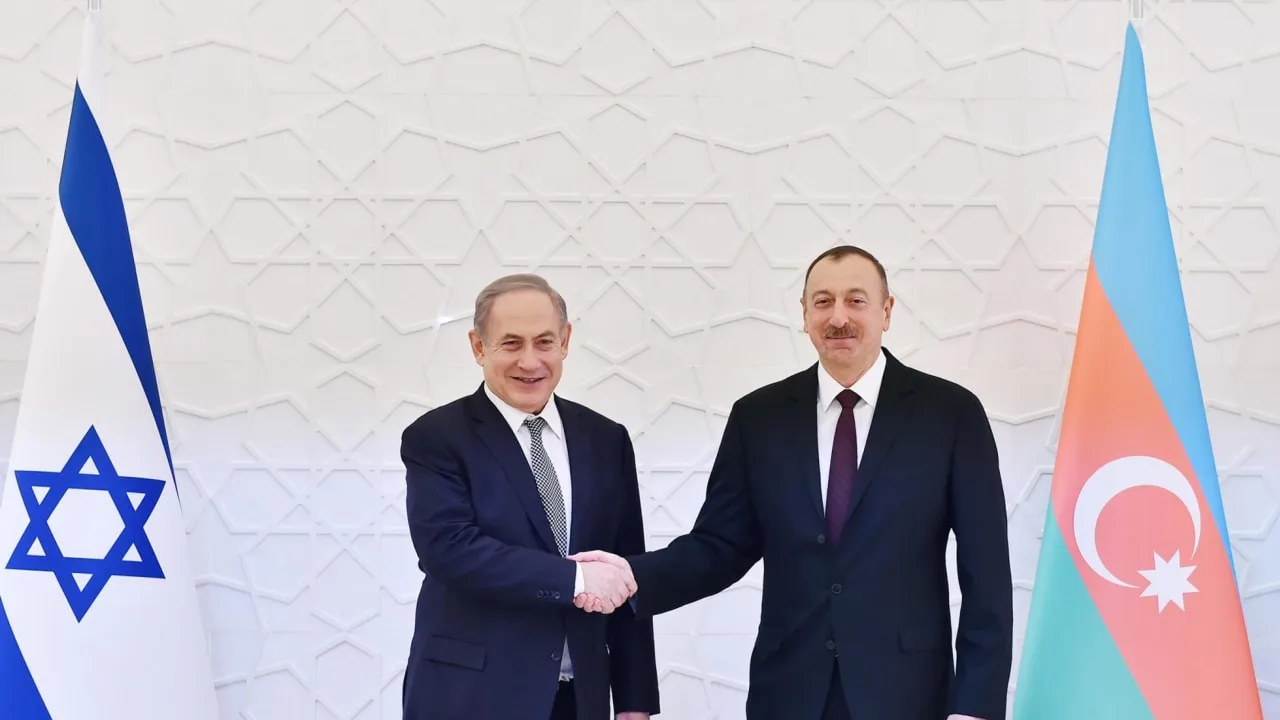
The ‘Azerbaijani Way’ lights the path to a more stable region.
The Jerusalem Post:
In the volatile landscape of the Middle East and its surroundings, nations generally fall into two categories: those that merely react to a shifting reality and those that proactively manage it with surgical precision.
Azerbaijan belongs firmly to the latter. Over the past years, Baku has transformed itself into a strategic pivot, essential not only to its own sovereignty but also to the stability of regional energy markets, global trade routes – and even regional stability.
For Israel, Azerbaijan is far more than a uniquely friendly Shia-majority nation or a reliable energy supplier. It is a sophisticated geopolitical actor operating in one of the most unforgiving neighborhoods on earth.
In a region where many players are quick to sever ties and sharpen ideological divides, Baku has mastered the art of “strategic maneuverability,” retaining the ability to communicate with rivals while deepening alliances with partners.
Far from being a matter of moral compromise, this is rather a calculated existential necessity. Azerbaijan’s unique strategic DNA is rooted in its geography.
It is the only nation on the planet that shares borders with both Russia and Iran, two neighboring giants that present a constant barrage of security, political, and economic challenges.
To the north lies Russia, a nuclear power with a long history of hegemony in the post-Soviet space. To the south lies Iran, an expansionist theocratic regime whose relationship with neighboring countries is frequently characterized by tension and suspicion.
In such a position, the margin for error is nonexistent, and every diplomatic cable, public statement, or military movement carries immense weight. Consequently, Azerbaijani policy is defined by a rigorous blend of caution and flexibility.
Baku refuses to become a total dependent of any single camp, instead positioning itself as a vital node, connecting East to West and North to South.
By making itself indispensable to global supply chains, Azerbaijan has effectively converted its physical geography into a diplomatic shield.
Israel can draw at least three main lessons from Azerbaijani policy.
One such lesson for Israel lies in Azerbaijan’s unique approach to “rhetorical deterrence.” To understand this, one should compare Baku’s recent conduct with that of Oman.
Both nations are neighbors of Iran; both have historically sought functional understandings with Tehran; and both were targeted by Iranian aggression for the first time during the current regional conflict (despite Azerbaijan hosting no US military presence at all).
The difference in their responses was night and day. When Oman was targeted, its reaction was characterized by frailty; official statements omitted the identity of the attacker in a futile attempt to avoid escalation.
The result was predictable: continued vulnerability and repeated threats.
Baku, however, chose a different path. Following a strike near a school and the airport in Nakhchivan, President Ilham Aliyev did not resort to vague diplomatic niceties.
He issued a sharp, public rebuke, labeling the act an “indelible stain” and a display of gross ingratitude.
Because Baku is known for its diplomatic restraint, this specific verbal escalation signaled to Tehran that a red line had been crossed. The message was received: Tehran offered a swift apology, and the attacks ceased.
This is “deterrence through precision,” the ability to use firm language to halt aggression without the immediate necessity of kinetic escalation.
For an Israeli establishment that sometimes struggles with uncoordinated or overly bellicose messaging, Baku’s calculated use of wording is a case study in strategic communication.
The second lesson is perhaps one of the most significant pillars of Azerbaijani foreign policy: the refusal to burn bridges.
Despite its deep and public security cooperation with Israel and despite its frictions with the Iranian regime, Baku maintains open working channels with nearly all regional players, including Russia, Turkey, the Gulf states, Iran, and the US.
This policy stems from the realization that a state at a sensitive crossroads cannot afford to be a hostage to any single geopolitical camp. By maintaining these channels, Azerbaijan ensures it is never cornered.
The third policy lesson is not far from what is already practiced by Israel and promoted by the current US administration.
It is noteworthy that both Israel and Azerbaijan were established in the crucible of war and external threats; both had to build potent militaries and resilient economies under duress in an unstable environment.
Nevertheless, Azerbaijan has shown that even at times of war and conflict, the ultimate goal must be the translation of military force into a sustainable political and economic settlement.
Baku is currently focusing on rehabilitating its ties with Armenia following decades of conflict, including the mutual opening of airspace, visits by civilian delegations, and even collaborations in the fields of energy.
This demonstrates an understanding that long-term security is bought with economic integration, not just superior firepower.
The strategic depth of the Israel-Azerbaijan relationship has reached a point where it can serve as the foundation for a broader regional architecture.
Beyond bilateral defense contracts, there is a burgeoning opportunity for a trilateral partnership involving the United Arab Emirates, with which Azerbaijan also boasts deep and meaningful relations.
A “Jerusalem-Baku-Abu Dhabi” axis could represent a new model of regional cooperation – one focused on connectivity, water technology, energy security, and joint infrastructure, especially as Azerbaijan already enjoys great ties with the UAE.
Such a framework would not only benefit the participating nations but could also serve as a moderating force, easing tensions with other major powers like Turkey or Saudi Arabia.
With its identity and historical ties across the region, Baku is uniquely positioned to act as a bridge-builder, facilitating messages between actors who are at odds.
It also holds the potential to form larger multilateral frameworks that would work together in areas of connectivity, technology, and AI – a sort of Abraham Accords 2.0.
If Israel is to think strategically about its environment, it should view Azerbaijan as more than a partner, but rather as a model of “sovereign agility.”
Baku has proven that a nation can be firm without being reckless and allied without being subservient.
As Israel faces its own era of profound regional realignment, the “Azerbaijani way” – a synthesis of strength, caution, and diplomatic flexibility – offers a vital roadmap for navigating a complex neighborhood and sustaining stability and prosperity in the region.
The writer is a MENA researcher at the regional program at MIND Israel.
79 Prisoners Executed in Iran in One Month
Latest Update on Lake Urmia’s Condition
Trump Considers Renewed Strikes on Iran After Midterm Elections – The Atlantic
Tabriz Activist Mehrdad Qadiri Arrested
Trump Says US Will Reach an Outcome on Iran “One Way or the Other” Soon
Arabian Gulf oil exports exceed prewar levels despite Iranian attacks — WSJ
Renewed US-Israeli attacks on Iran remain possible, FT reports
Amnesty International Raises Alarm Over Executions in Iran
Anti-Azerbaijan Protest Held in Tehran
Political Prisoner Dies in Karaj Prison
Israel’s Foreign Minister Accuses Iran of Hypocrisy Over Comments on France’s Protest Crackdown
US Attack on Iran Possible, Araghchi Warns
IRGC Helping Direct Houthi Attacks, Media Reports
Saudi Arabia Accuses Iran of Fueling Increased Houthi Attacks
Kurdish Party Reasserts Territorial Claims Against Azerbaijan
Anti-Azerbaijan Protest Held in Mashhad
US Weighs Deploying ‘Mother of All Bombs’ in Potential Strikes on Iran – CNN
Women’s Basij Unit Commander Killed in Shooting in Sistan and Baluchestan
Iranian Police Shoot and Kill Three Civilians
Four More Prisoners Executed in Three Iranian Cities
Arabian Gulf oil exports exceed prewar levels despite Iranian attacks — WSJ
Al-Akhbar: US issues final warning to Iran over strikes on nuclear facilities
Anti-Azerbaijan Protest Held in Tehran
Renewed US-Israeli attacks on Iran remain possible, FT reports
Israel’s Foreign Minister Accuses Iran of Hypocrisy Over Comments on France’s Protest Crackdown
IRGC Helping Direct Houthi Attacks, Media Reports
Iran’s Oil Reserves Stored on Tankers Run Dry Amid US Blockade – WSJ
Vance Says He and Trump Share the Same Approach to Military Action Against Iran
US Attack on Iran Possible, Araghchi Warns
Iran Arrests 39 People Over January Protests
Amnesty International Raises Alarm Over Executions in Iran
Political Prisoner Dies in Karaj Prison
Two Lawyers Arrested in Tabriz
Trump Says US Will Reach an Outcome on Iran “One Way or the Other” Soon
Tabriz Activist Mehrdad Qadiri Arrested
Trump Considers Renewed Strikes on Iran After Midterm Elections – The Atlantic
38 Women and Children Killed in Iran Over Two Months
UN Iran Rapporteur Says War Has Deepened Repression in the Country