

While everyone inside Iran has suffered since the ceasefire came into effect, with the rampant repression gaining steam during the pause in fighting, Iran’s ethnic minorities in particular have felt the heat
79 Prisoners Executed in Iran in One Month
UN Iran Rapporteur Says War Has Deepened Repression in the Country
Unemployment Rises in Iran Following War, MP Says
Latest Update on Lake Urmia’s Condition
Trump Considers Renewed Strikes on Iran After Midterm Elections – The Atlantic
38 Women and Children Killed in Iran Over Two Months
Tabriz Activist Mehrdad Qadiri Arrested
Iran’s Oil Reserves Stored on Tankers Run Dry Amid US Blockade – WSJ
Trump Says US Will Reach an Outcome on Iran “One Way or the Other” Soon
Al-Akhbar: US issues final warning to Iran over strikes on nuclear facilities
Arabian Gulf oil exports exceed prewar levels despite Iranian attacks — WSJ
Renewed US-Israeli attacks on Iran remain possible, FT reports
Two Lawyers Arrested in Tabriz
Amnesty International Raises Alarm Over Executions in Iran
Anti-Azerbaijan Protest Held in Tehran
Political Prisoner Dies in Karaj Prison
Iran Arrests 39 People Over January Protests
Israel’s Foreign Minister Accuses Iran of Hypocrisy Over Comments on France’s Protest Crackdown
US Attack on Iran Possible, Araghchi Warns
Vance Says He and Trump Share the Same Approach to Military Action Against Iran
IRGC Helping Direct Houthi Attacks, Media Reports
Saudi Arabia Accuses Iran of Fueling Increased Houthi Attacks
Another Cleric Killed in Iran
Kurdish Party Reasserts Territorial Claims Against Azerbaijan
Anti-Azerbaijan Protest Held in Mashhad
Israeli President: Azerbaijan is a very tolerant country, Baku taking important steps for international peace under such circumstances
US Weighs Deploying ‘Mother of All Bombs’ in Potential Strikes on Iran – CNN
Islamic Republic Could Fall Under These Circumstances – Ardestani
Women’s Basij Unit Commander Killed in Shooting in Sistan and Baluchestan
Iranian Police Shoot and Kill Three Civilians
Four More Prisoners Executed in Three Iranian Cities
Qatar’s Emir Accuses Iran of Violating the Country’s Sovereignty
Lake Urmia’s ecological balance remains unrestored, official says
WSJ: Iran threatens to deploy troops into neighboring countries as it prepares for renewed war
Chinese Foreign Minister Wang Yi to Visit Azerbaijan
Israeli President Isaac Herzog to Visit Azerbaijan
Hundreds of armed fighters sent into Iran, state-linked media reports
Iran’s Supreme Court Upholds Death Sentence of Another Political Prisoner
Armed Clashes in Iran Leave Dead
Isfahan Judiciary Chief Threatens Women Who Do Not Wear Hijab
Ideological Centers in Iran Call for Provocations in Azerbaijan
Mirsalim: Iran’s Oil Belongs to God and the Prophet
US Report: Iran’s IRGC Recruits Children as Young as 12 for Security Missions
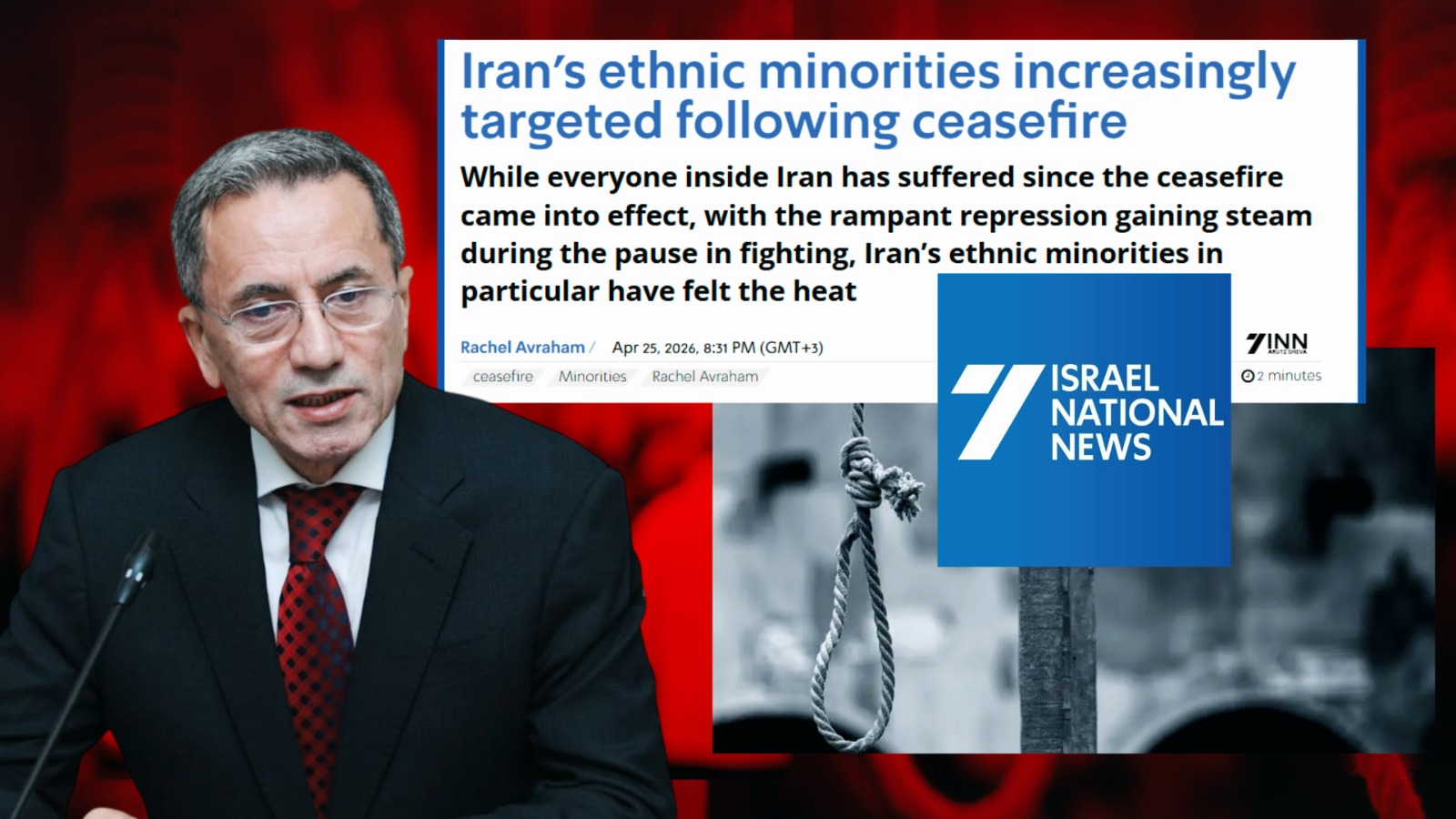
While everyone inside Iran has suffered since the ceasefire came into effect, with the rampant repression gaining steam during the pause in fighting, Iran’s ethnic minorities in particular have felt the heat
As the United States decides how long to continue the ceasefire, there are reports inside Iran that the Islamic Republic has increased its human rights violations since Operation Roaring Lion/Operation Epic Fury took a pause. Over the past three weeks, eight alleged members of the People’s Mojahedin Organization of Iran (PMOI/MEK), along with seven protesters arrested during the January 2026 uprising, have been executed.
Ahmad Obali, a prominent South Azerbaijani dissident journalist who heads Gunaz TV, recently reported that Iran’s ethnic minority groups, including South Azerbaijanis and other ethnic groups in particular, have been increasingly targeted since the cease-fire came into effect. He reported: “63 people in the province of East Azerbaijan were arrested following the ceasefire." Obali noted an example of a mother who was arrested because her 13-year-old daughter sent pictures outside of Iran.
Obali claims that these people were arrested for “high treason" for doing nothing more than perhaps sending a picture of the damage inside Iran relatives or friends outside of Iran: “They are charged with ‘cooperating with the enemy’ as their relatives are outside of Iran. They are usually judged guilty until they prove themselves innocent, which is very difficult to do. Many of these people will likely be wrongfully executed as scapegoats, so that the Intelligence Unit of IRGC can claim that they are on top of things."
According to Obali, “The arrestees names are not published, so it is hard for the outside world to get in touch with their relatives. If the people speak about their relatives being arrested, they themselves will be arrested as well. So the regime is trying to create fear amongst the people to hold them back from any possible protests."
However, the Iranian regime is not only engaging in mass executions and arrests. They are continuing to attack civilians on other fronts as well.
Salah Bayaziddi, the Washington, DC representative of the Komala Party of Iranian Kurdistan, added: “So far, since the ceasefire came into effect across all fronts, the Iranian regime has intensified its drone and missile attacks on the families and civilian camps of Iranian Kurdish opposition groups. These camps are under the supervision of the UNHCR and should be protected under international law. They were heavily targeted during the 39-day war, and even now, despite the ceasefire on all fronts, Kurdish positions continue to come under fire."
Iranian journalist Mohsen Beyzad Karimi noted that the Iranian regime’s repression since the ceasefire is not limited to minorities: “It is nationwide. In recent weeks, there has been a rise in executions, arrests, torture and enforced disappearances across the country. While the attacks have targeted armed groups such as Komala and other Kurdish militant organizations, these are not attacks on minorities as such but operations against specific armed factions---something that is not new in the Iranian context."
Karimi continued: “Iran is a diverse country, home to over 20 million Azeris, 8 to 10 million Kurds, several million Arabs, as well as Baloch and Turkmen. However, self-proclaimed minority political or militant groups do not represent these populations in any meaningful way. In most cases, especially beyond certain Kurdish groups, there is no comparable organized military presence. Framing these developments as attacks on minorities risks misrepresenting the situation and overlooking the broader, nationwide nature of repression."
Obali agreed with Karimi that Iran is a multi-ethnic country, but disagreed with him on the nature of the attacks: “The Persian nationalists do not want the ethnic minorities to speak about the violation of their human rights separately from the rest of the country. They also try to discredit the ethnic minority organizations. Iran is a multi-ethnic country, composed of Azerbaijanis, Persians, Kurds, Baloch, Ahwazi Arabs, Turkmen, Gilaks, Mazanis, Lors, etc. Azerbaijanis and Persians are the largest groups, but none of them make up over forty percent of the population. Although some Persian nationalists and the Islamic Republic minimize the number of non-Persian ethnic groups, they make up at least sixty percent of the population and the recent crackdown by the government has been extremely harsh on the ethnic regions. The Islamic Republic of Iran and the Persian nationalists always downplay the importance of ethnic regions."
In conclusion, while everyone inside Iran has suffered since the ceasefire came into effect, with the rampant repression gaining steam during the pause in fighting, Iran’s ethnic minorities in particular have felt the heat. As the ceasefire halting the US-Israeli military campaign in Iran continues, the Iranian regime has reportedly taken advantage of the pause in order to increase internal repression in order to prevent a fresh wave of protests from taking place. For the people of Iran, in that case, the ceasefire has brought about increased persecution, not relief.
And although all Iranians feel this repression, Iran’s ethnic minorities feel the heat even more harshly than the Persians.
79 Prisoners Executed in Iran in One Month
Latest Update on Lake Urmia’s Condition
Trump Considers Renewed Strikes on Iran After Midterm Elections – The Atlantic
Tabriz Activist Mehrdad Qadiri Arrested
Trump Says US Will Reach an Outcome on Iran “One Way or the Other” Soon
Arabian Gulf oil exports exceed prewar levels despite Iranian attacks — WSJ
Renewed US-Israeli attacks on Iran remain possible, FT reports
Amnesty International Raises Alarm Over Executions in Iran
Anti-Azerbaijan Protest Held in Tehran
Political Prisoner Dies in Karaj Prison
Israel’s Foreign Minister Accuses Iran of Hypocrisy Over Comments on France’s Protest Crackdown
US Attack on Iran Possible, Araghchi Warns
IRGC Helping Direct Houthi Attacks, Media Reports
Saudi Arabia Accuses Iran of Fueling Increased Houthi Attacks
Kurdish Party Reasserts Territorial Claims Against Azerbaijan
Anti-Azerbaijan Protest Held in Mashhad
US Weighs Deploying ‘Mother of All Bombs’ in Potential Strikes on Iran – CNN
Women’s Basij Unit Commander Killed in Shooting in Sistan and Baluchestan
Iranian Police Shoot and Kill Three Civilians
Four More Prisoners Executed in Three Iranian Cities
Arabian Gulf oil exports exceed prewar levels despite Iranian attacks — WSJ
Al-Akhbar: US issues final warning to Iran over strikes on nuclear facilities
Anti-Azerbaijan Protest Held in Tehran
Renewed US-Israeli attacks on Iran remain possible, FT reports
Israel’s Foreign Minister Accuses Iran of Hypocrisy Over Comments on France’s Protest Crackdown
IRGC Helping Direct Houthi Attacks, Media Reports
Iran’s Oil Reserves Stored on Tankers Run Dry Amid US Blockade – WSJ
Vance Says He and Trump Share the Same Approach to Military Action Against Iran
US Attack on Iran Possible, Araghchi Warns
Iran Arrests 39 People Over January Protests
Amnesty International Raises Alarm Over Executions in Iran
Political Prisoner Dies in Karaj Prison
Two Lawyers Arrested in Tabriz
Trump Says US Will Reach an Outcome on Iran “One Way or the Other” Soon
Tabriz Activist Mehrdad Qadiri Arrested
Trump Considers Renewed Strikes on Iran After Midterm Elections – The Atlantic
38 Women and Children Killed in Iran Over Two Months
UN Iran Rapporteur Says War Has Deepened Repression in the Country