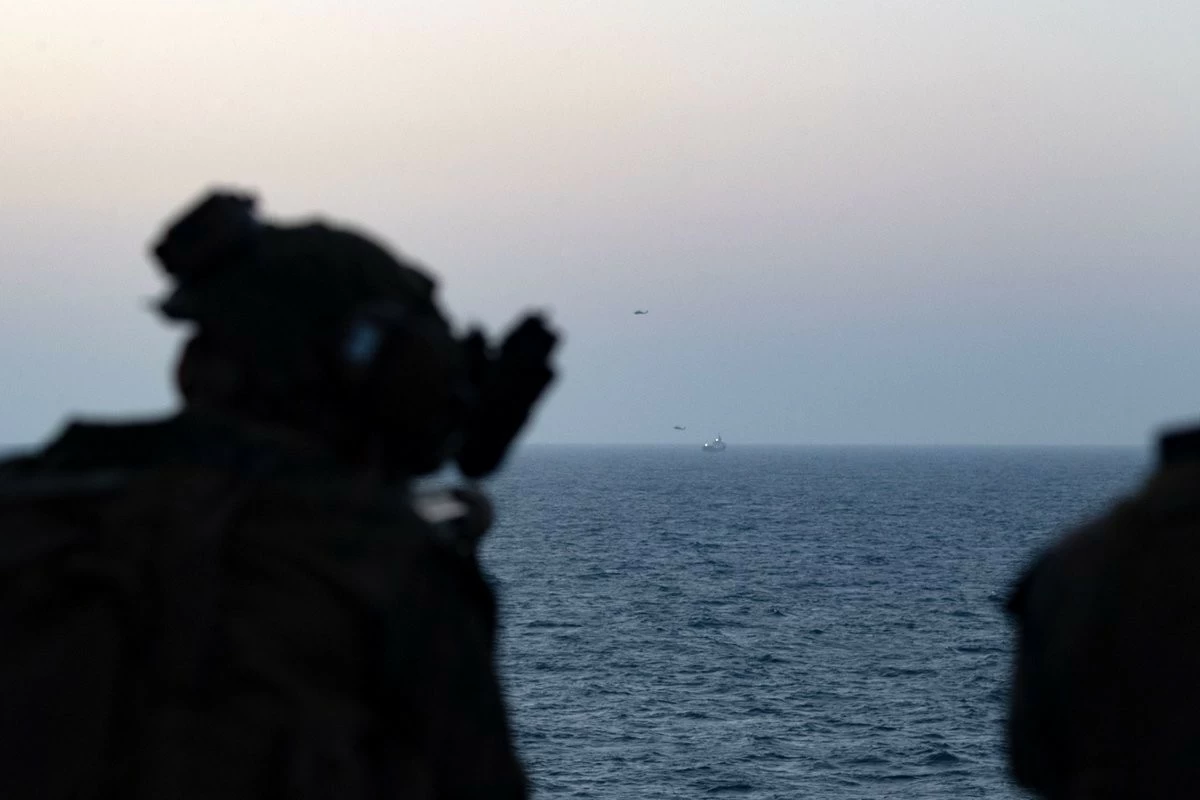
At the outset of the war in February, Iran appeared to gain some advantage by interfering with traffic through the Strait of Hormuz, a critical route for roughly 20% of global oil and LNG supplies. However, Washington later countered with a blockade targeting Iranian ports, undermining tanker networks that had long enabled Tehran to send oil to China despite sanctions.
Citing data firm Kpler, the report said there is no indication that any Iranian oil shipments have successfully passed the blockade to reach Chinese or other buyers. US Central Command also reported that 44 commercial vessels operating on Iran’s behalf were ordered to turn back or return to port.
Options for rerouting trade remain limited. According to Iran’s Shipping Association, only about 40% of the country’s trade can be redirected away from affected ports.
The blockade has intensified divisions within Iran’s leadership. More pragmatic figures are pushing for negotiations, while hardliners argue the blockade amounts to an act of war that should be met with force. One analyst described the situation as a shift in perception, saying the blockade is increasingly seen in Tehran not as an alternative to war, but as another form of it.
The report added that Iranian officials have discussed potential escalation using capabilities not yet deployed. In a related development, the IRGC-linked Tasnim agency recently highlighted undersea internet cables in the Strait of Hormuz, a move interpreted as a warning that regional communications infrastructure could become a target.
According to the Journal, Tehran has proposed a deal to regional mediators to halt attacks in the strait in exchange for ending the war, lifting the blockade, and delaying nuclear negotiations.
Meanwhile, President Donald Trump has reportedly instructed aides to prepare for a prolonged blockade that could remain in place until Iran meets US demands on its nuclear program. He described the strategy as “100% foolproof.”
The ongoing conflict has taken a heavy toll on Iran’s economy, leaving over a million people unemployed, driving up food prices, extending internet shutdowns, and pushing the rial sharply lower, with the dollar trading at around 1.81 million rials.